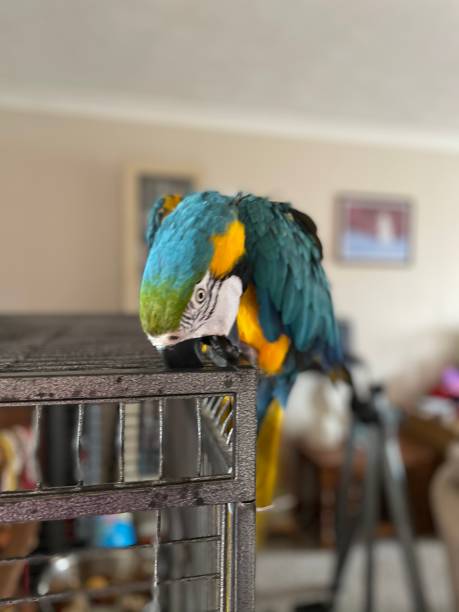
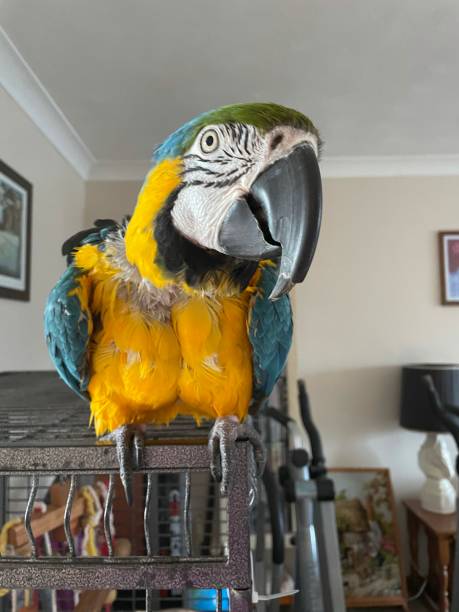
Blue-and-Gold Macaw
Species Overview
The Blue-and-gold Macaw (Ara ararauna) is a large South American macaw, about 80-90 cm (32-35 in) long including the tail and roughly 0.9-1.3 kg in weight. Well-kept birds commonly live 40-60 years, so ownership often has to be planned beyond one person's lifetime. Three things define living with one: a contact call loud enough to carry through walls, which rules out flats and attached housing; a beak that dismantles furniture, window frames and cheap cages; and a strong daily need for social contact, exercise and several hours outside the cage. It is generally considered the most adaptable and forgiving of the large macaws, but it is not a beginner's bird.
Palm swamps and river forests of South America
Blue-and-gold Macaws range from eastern Panama through northern and central South America to Bolivia and Brazil, with a small reintroduced population on Trinidad. They favour seasonally flooded forest, gallery forest along rivers and swamps dominated by moriche palms (Mauritia flexuosa), whose dead, hollow trunks are their preferred nest sites. Pairs stay together within larger flocks and are often seen flying side by side. They feed on palm fruits, seeds and nuts, and in western Amazonia they gather at exposed riverbank clay licks. Daily flights between roost and feeding areas can cover many kilometres, which explains both their stamina and their need for exercise in captivity.
80-90 cm, around a kilogram, and no visible sex difference
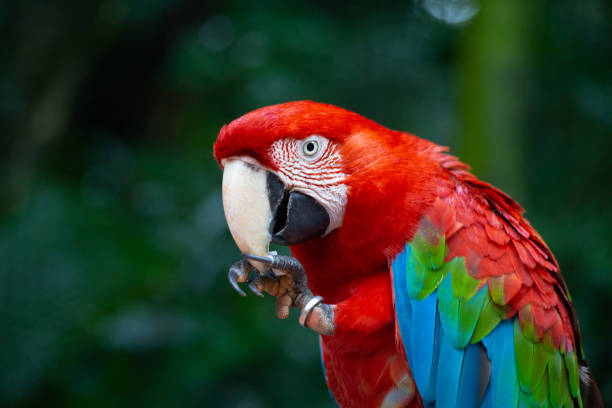
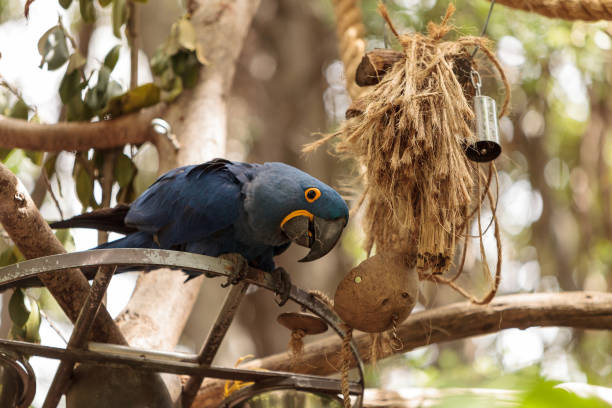
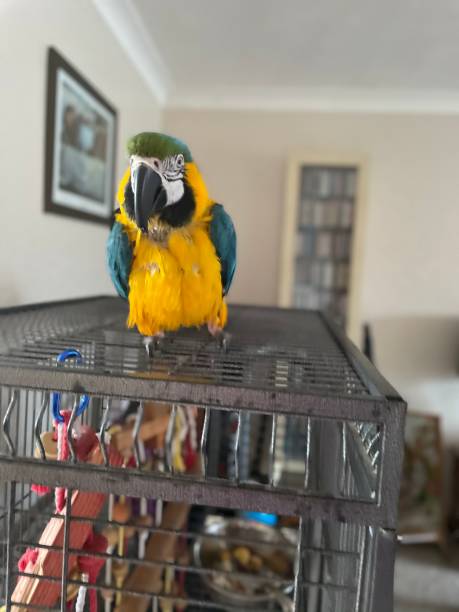
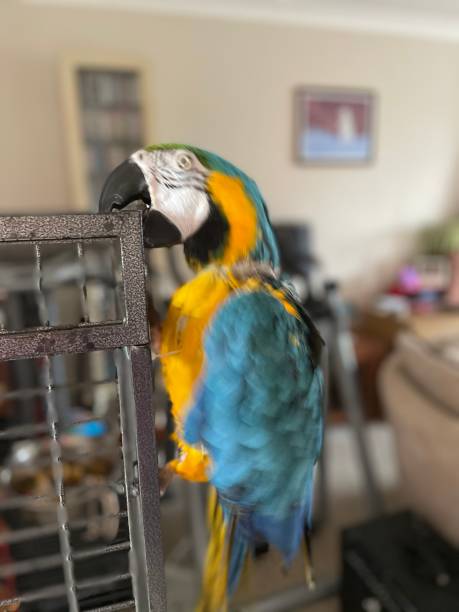
Adults measure about 80-90 cm (32-35 in) from crown to tail tip, with a wingspan of roughly 1 m or slightly more, and usually weigh around 0.9-1.3 kg. Individual weights vary, so learn your own bird's normal weight on a gram scale rather than relying on a chart. Males and females look alike; reliable sexing requires a DNA test from a feather or blood sample. Juveniles have dark eyes that lighten to pale yellow over the first years. Well-kept birds commonly reach 40-60 years, and a macaw acquired by a 30-year-old may still outlive its owner, so a written plan for its future care is sensible.
Loud, sociable and not for flats or first-time owners
Blue-and-golds are outgoing, playful and usually tolerant of several family members, which makes them the most manageable large macaw for many people. That does not make them easy. Their contact calls, especially at dawn and dusk, carry to neighbouring houses and cannot be trained out of a macaw. Most learn some words and short phrases, but their speech is less clear and less extensive than an African Grey's. They are not suitable for flats, terraced houses, households that are empty all day, families with small children who cannot be supervised around the bird, or anyone unable to plan for a bird that may live 50 years or more.
Heavy-gauge housing for a destructive chewer
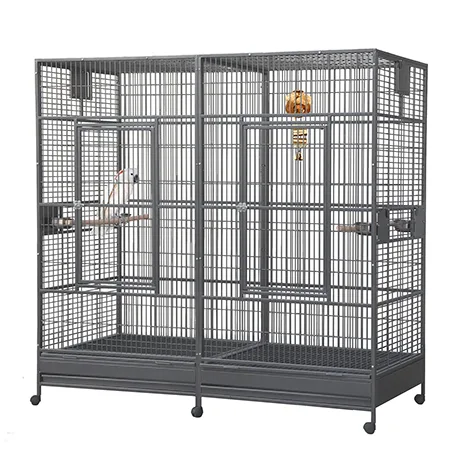
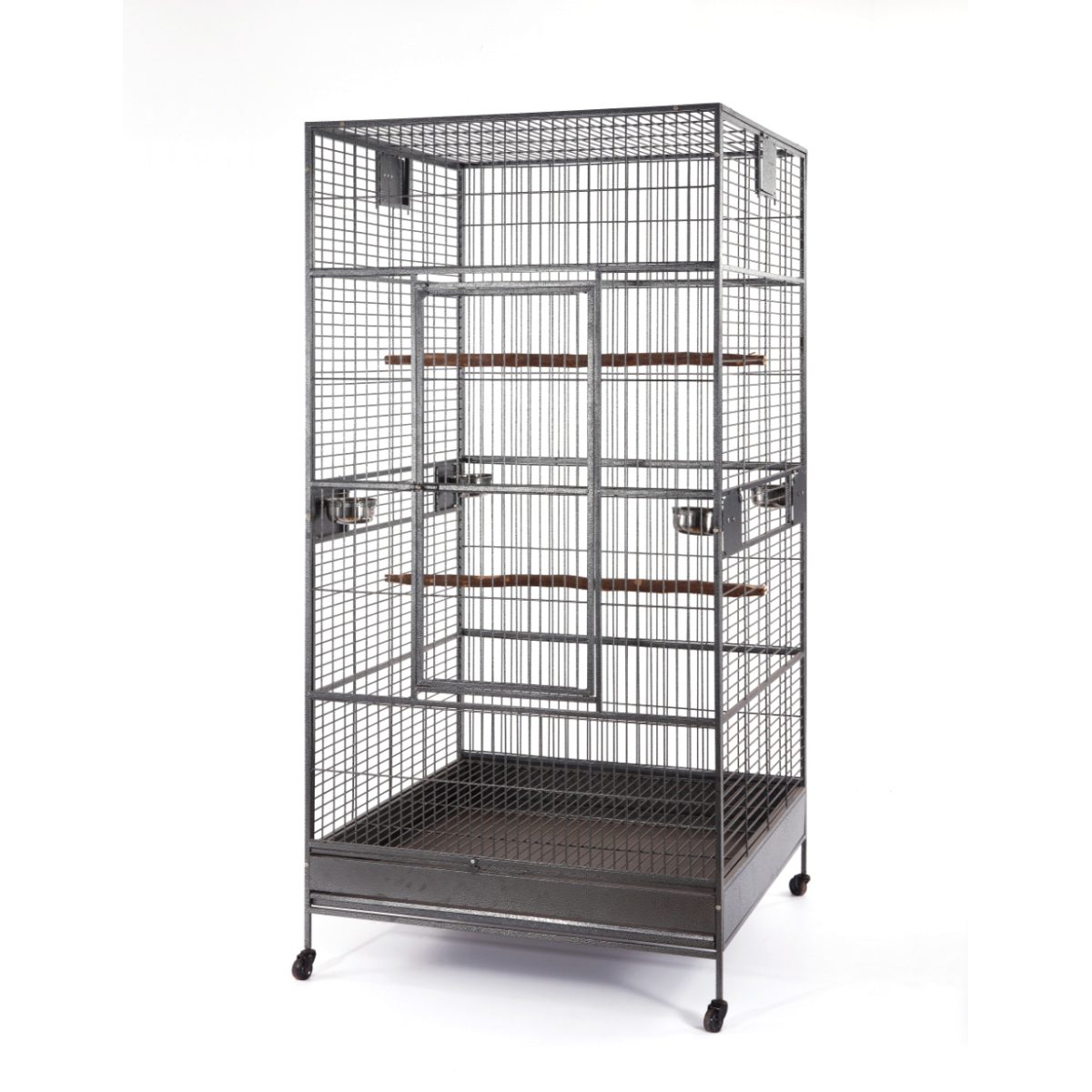
Treat 120 x 90 x 160 cm (47 x 35 x 63 in, W x D x H) as the absolute minimum cage for one bird, used as a base rather than a daytime home; a sheltered aviary or bird room with flying space is far better. In Germany, federal expert guidance on minimum standards for parrot keeping sets aviary dimensions for large macaws. Bars of 2.5-3.8 cm and wire of at least 5 mm are needed, as lighter cages get bent. Use stainless or quality powder-coated steel, never galvanised mesh, which causes zinc poisoning. Padlock the doors, since macaws learn to open latches, and set perches so the long tail clears the floor and bars.
More fat than an Amazon, but vegetables still come first
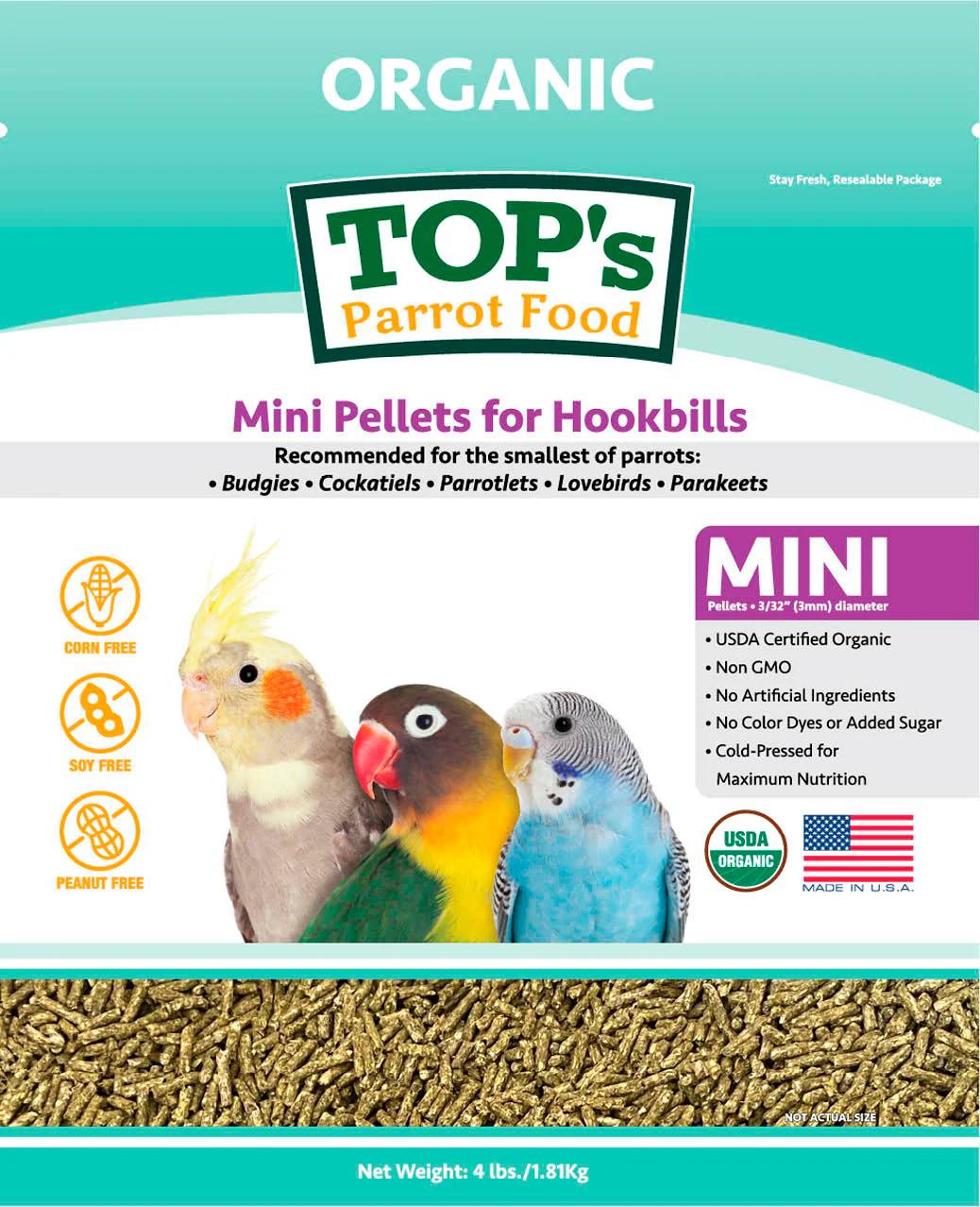
Wild Blue-and-golds eat many palm fruits and nuts, and macaws generally tolerate more dietary fat than Amazons or cockatoos. In captivity the base is still a good-quality pellet with a large daily portion of vegetables such as carrot, sweet potato, peppers, broccoli and leafy greens, plus some fruit. Add a small daily ration of nuts in the shell, such as walnuts, pecans, almonds or macadamias; because a macaw cracks almost any shell, whole macadamias that smaller parrots cannot open are suitable here and give the beak real work. Buy human-grade nuts, as mouldy nuts can contain aflatoxins. Keep sunflower seed and peanuts minimal: an all-seed diet leads to vitamin A deficiency and obesity.
Three to four hours out of the cage, every day
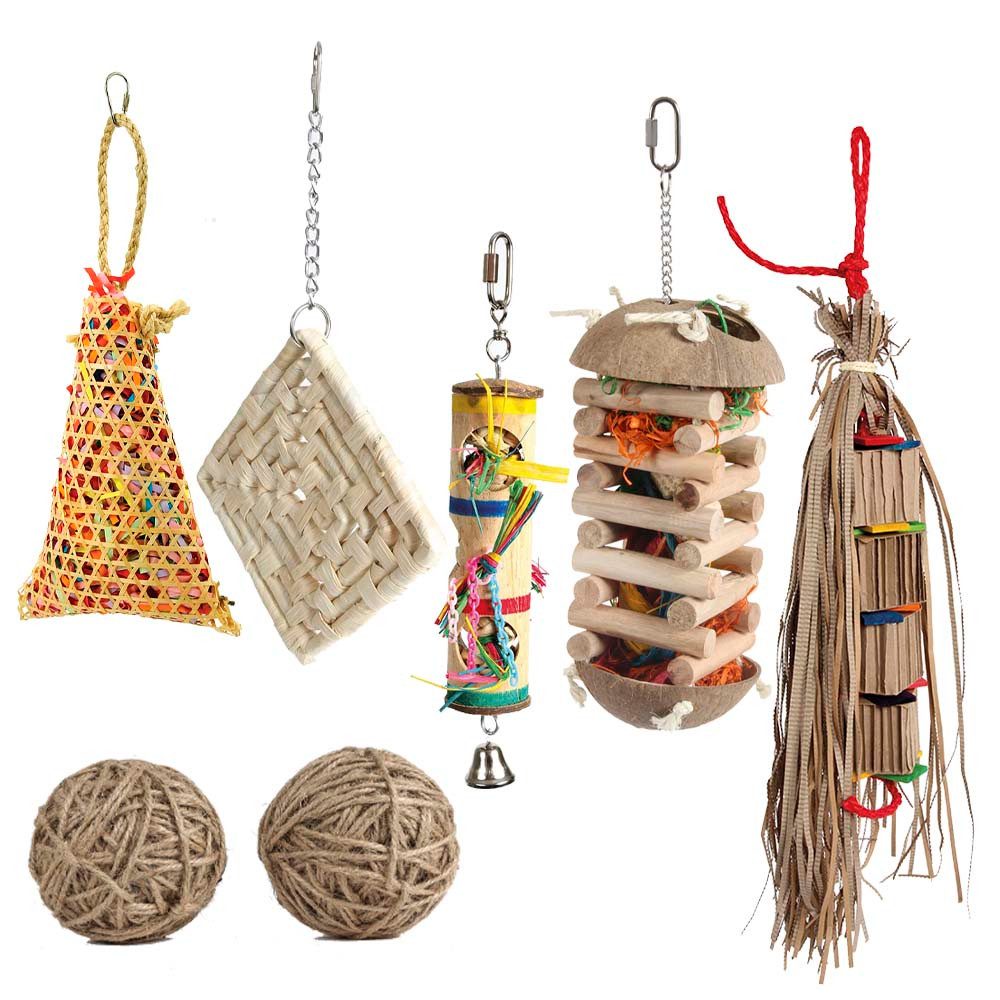
A Blue-and-gold needs at least three to four hours a day out of the cage, with supervised climbing, flight where space allows, and direct contact with its people. German federal guidance also advises against keeping parrots singly; a companion macaw helps, but does not replace your time. Budget for a constant supply of chewing material: softwood blocks, untreated pine, cardboard, palm leaves and large foraging toys may be destroyed within hours, and replacing them is a real ongoing cost. Hide part of the daily food in boxes, paper or shells so the bird has to work for it. A large, sturdy play stand keeps it off the furniture. Birds left alone through long workdays commonly develop screaming and feather plucking.
CITES Appendix II / EU Annex B: what paperwork to expect
Ara ararauna is listed on CITES Appendix II and in Annex B of the EU Wildlife Trade Regulation (EC) No 338/97. Within the EU, an Article 10 certificate is not required for sale, but you should receive written proof of legal origin, such as the breeder's documentation with the ring or microchip number, and keep it for the bird's whole life. Import into or export out of the EU needs CITES permits. In Germany, many protected species must be reported to the local nature conservation authority when acquired; ask your authority whether this applies. Keep all documents together, as they are needed if the bird is ever sold, rehomed or moved abroad.
Training & Enrichment
Blue-and-golds are generally regarded as the most forgiving of the large macaws to train and recover comparatively well from handler mistakes. Establish step-up, station, target and recall early with positive reinforcement, and prioritise cooperative-care behaviours - voluntary scale-stepping, foot presentation, towel acceptance - because you are building a veterinary relationship that may last five decades. They are good candidates for harness training if it is introduced patiently while the bird is young. Keep sessions short, reward calm behaviour rather than screaming, and never use force: a frightened macaw with a beak this size is a genuine safety risk to adults and children.
Health Considerations
Feather-destructive behaviour is the commonest complaint and is usually a husbandry or social problem rather than a medical one, although an avian vet should rule out medical causes first. Proventricular dilatation disease (avian bornavirus) is a significant risk in large macaws, making a 30-45 day quarantine in a separate airspace with veterinary screening essential for any new bird. Aspergillosis follows damp bedding and poor ventilation; hypovitaminosis A follows seed-based diets; zinc toxicosis follows chewing galvanised wire. Older birds on high-fat rations can develop atherosclerosis. Weigh weekly on a gram scale and book an annual avian examination with periodic bloodwork.
Frequently Asked Questions
Well-kept Blue-and-gold Macaws commonly live 40-60 years, and some exceed that. Poor diet, lack of exercise and untreated feather plucking shorten lives considerably. Because a young macaw may outlive its first owner, anyone buying one should decide who would take over its care and put that in writing. It is a commitment of several decades and should be planned like one.
Very loud. Contact calls, especially in the morning and evening, carry to neighbouring houses and cannot be trained away, only reduced by good routines and enrichment. Most birds learn a handful of words and short phrases, but their speech is less clear and less extensive than an African Grey's. Buy one for its company, not for talking, and only if your household and neighbours can live with the noise.
No. Although it is the most adaptable of the large macaws, it combines extreme noise, a beak capable of serious injury, high costs for cages, toys and veterinary care, and a lifespan of many decades. Someone new to parrots should gain experience with a smaller species first, ideally also spending time around large macaws, before committing to one.
At minimum a cage of 120 x 90 x 160 cm (47 x 35 x 63 in, W x D x H) with 2.5-3.8 cm bar spacing and wire of 5 mm or more, used as a base alongside several hours out of the cage each day. An indoor bird room or a sheltered aviary where the bird can actually fly is far better. Avoid galvanised mesh, which risks zinc poisoning.
Nuts are a natural part of their diet and macaws handle more fat than smaller parrots, but nuts should be a supplement, not the base. A few walnuts, pecans or macadamias in the shell each day provide fat and beak exercise; the rest should be pellets, vegetables and some fruit. Buy human-grade nuts, since mouldy nuts can contain aflatoxins.